






Features: February 2010 Archives

This month I have the pleasure of featuring Jon Land. He's not only a terrific author, he's a good friend. I first met Jon at the 2008 ThrillerFest. He was personable and attentive, and took an immediate interest in my career. You won't find a kinder pro in the business. Both in and out of workshops, I routinely heard Jon offer words of encouragement to his students and fellow authors.
The publishing industry is tough, especially commercial fiction, and breaking in isn't easy. Jon goes out his way to help aspiring authors. He gives hope to those still struggling, and often, a glimmer of hope is all they need to keep going.
Jon not only writes mainstream thriller fiction, he's expanding his talents to focus on screenwriting as well. His first film credit, a teen caper-comedy called DIRTY DEEDS, was released theatrically in the summer of 2005 and in DVD in January of 2006. His other current film projects include the psychological-thriller PARANOIA and CHALK (Handpicked Films, Michel Shane) and LUCKY DOG (Gravity Entertainment). And he is currently adapting STONG ENOUGH TO DIE for the screen.
It's a tall order adapting your book to screen. How do you convert (edit down) a four hundred page novel onto a 110 page screenplay? Just thinking about it gives me a headache. It's one of the things I plan to ask Jon at ThrillerFest 2010.
In the following interview, I asked Jon some questions that will give you a better feel for who Jon Land really is and why he's so passionate about writing.
Recently I sat down with Clea Simon to talk about her newest mystery, Grey Matters.
Give us a brief overview the second Dulcie Schwartz mystery- Grey Matters
This series centers around Dulcie Schwartz, a literature grad student at Harvard University, who is trying to write her thesis on an overlooked Gothic novel from the 1790s... only murder keeps getting in the way. In this second outing, Grey Matters, everybody has got something to hide. Dulcie's office mate is acting furtive, her roommate is avoiding her, and even her boyfriend seems to have gone AWOL. And when our grad student heroine literally stumbles over a dead body on the stoop of her professor's Tory Row home, she knows she's going to need some help. Pity her professor seems more concerned with his departmental politics - and even the loyal specter of her late, great cat, Mr. Grey seems to have gone silent.
How did the idea for this book come to you?
Within the parameters of a cozy with paranormal aspects (that ghost cat!), I wanted to play with a classic mystery paradigm - the case where lots of people seem to be reasonable suspects. I was thinking a lot about motive when I planned this book. I was thinking that most of us have secrets and things that we are desperate to keep out of the public eye, but with that in mind, which of us could be pushed over the edge? It is very important to me to have my characters be real, to feel real, despite the paranormal aspects, and that means coming up with a villain who has an emotionally believable motive.
Drugs, alcohol, murder, and baseball - no, it's not the latest major leaguer press conference - it's Rick Wilber's latest thriller, Rum Point. Set on both the gulf coast of Florida and the Cayman Islands, Rum Point mixes a modern mystery thriller with a baseball narrative. Felicity Lindsay, a small-town police officer finds a battered murder victim on the beach. Her curiosity about the crime eventually leads Felicity and her father, Stu Lindsay, the alcoholic manager of the local major-league baseball team, into a deadly confrontation with a drug cartel.
"I didn't necessarily start to write a thriller, but as the story progressed I realized that it very much was one and I enjoyed that little bit of self-discovery. The various conflicts in the novel really keep things moving, I hope, and the reader comes to realize there are both internal and external struggles for all the characters in the story. I wanted a daughter in peril and a father who must change his own life in order to save hers. But I wanted her to be very strong, and throughout the novel she thinks (quite rightly) that she's saving him. I had a lot of fun playing with that mix of perspectives.
Amy Dawson Robertson's debut Miles to Go introduces a brand new heroine for thriller fanatics to soak up and cheer on. Rennie Vogel is an FBI counterterrorism operative that HALO jumps without a second thought and holds her own against the men in her unit and the adversity and challenges of her mission.
All Rennie Vogel wants is to serve her country...
Rennie has devoted her life and body to training as an FBI counterterrorism operative. The brutal pace has slowly stripped away her private life. When her ambition of being the first woman ever considered to join CT3 is finally realized, she pushes herself to the limit to earn the position.
When one disaster after another befalls her, Rennie finds herself alone. Only then does she begin to unravel the misdirection and deceit that surrounds their first assignment, and to wonder if her failure, not her success, was part of the plan. Ultimately, with miles through an inhospitable landscape and an ambiguous enemy between her and safety, Rennie must decide if she can trust the one thing she never has before: another woman.
Good things can often be found in files. Whether it involves X's, Dresdens, or even Rockfords, many good stories can be found hiding within the dusty confines of your average four drawer filing cabinet. Author Peter May has such a cabinet. If you dare to open the top drawer and thumb your way to the section marked E, you'll likely to come across the Enzo Files.
In May's newest novel, Freeze Frame, Enzo Macleod is a half-Scottish, half-Italian former forensic scientist who now lives in France and works as a university professor in Toulouse. As a result of a wager, he becomes involved in solving old French 'cold cases' using the latest in forensic technology. But where there are unsolved murders, there are also killers who are desperate to protect their secrets, and Enzo soon finds that a lifetime spent in laboratories has hardly equipped him with tools needed to survive the life-threatening situations that he encounters.
File #1 in Section E of the top drawer contains the first Enzo story, Extraordinary People. Here we get plenty of insight into the arcane world of France's ruling elite. A complex puzzle sends Enzo on a scavenger hunt around France for body parts, culminating in a thrilling denouement in the catacombs of Paris.
With her fourth Sarah Woodson novel, Scandal on Rincon Hill, coming out March 30, Shirley Tallman is busier than usual with additional publicity chores added to an already full schedule. But she's not too busy for family as in the middle of these demands she travelled to San Francisco to celebrate her daughter's birthday.
All this is in the present. Most days, however, find Shirley buried in the past - the 1880s in San Francisco, California to be exact. Writing historical mysteries pose certain challenges involving lots of research - research hampered by the 1906 fire which destroyed untold numbers of primary sources including personal writings and legal records and documents. It also means she has no one to interview, no one to ask, "What was life like back then?"
As one can imagine, research was necessary and continues for each novel in the series that began with Murder on Nob Hill in 2004. Shirley says, "I'm very nervous about getting something wrong, so I try to cross-check information whenever possible...I do the best I can. Thank God for the Internet."
Christy Reece launched her writing career like a rocket. In 2009, her first three novels, the first trilogy in her Last Chance Rescue series, were released as back-to-back lead titles. She's done it again this year with her second trilogy in the series. No Chance, the first of the second trilogy, just released, and the following two, Second Chance and Last Chance, will hit bookstore shelves in the next two months, all as lead titles. Already, the accolades have begun. Publishers Weekly gave No Chance a starred review, saying "[s]izzling romance and fraught suspense fill the pages as the novel races toward its intensely riveting conclusion."
Christy took a few moments to speak to The Big Thrill, and to discuss, among other things, why her seemingly overnight success as an author was anything but.
What was the inspiration for your Last Chance Rescue Series?
I'm a news junkie and the news is often going on in the background when I'm writing. Missing persons cases have always captured my attention. They're sad but infinitely intriguing, especially the people who are never found. One day, a high profile case from my hometown caught my attention. For weeks, I was glued to the television, following everything that was being done...every report. The longer the case went on, the more apparent it became that there wouldn't be a good outcome. I began to wish that an organization existed--a place where families could go for one last chance to find their loved ones. When all leads have dried up and every avenue has led to a dead end, this organization would accomplish what no one else could: No matter the cost, no matter the risk, they would rescue the innocent. In the midst of that wish, Last Chance Rescue was born.
Andy McDermott is a thriller novelist phenomenon, and we are happy to have a chance to interview him today. We'll want to know about his latest thriller, The Secret of Excalibur, as well as his meteoric rise to the best seller lists, and the secrets of his success. We'll ask about his plans for future writing endeavors.
Andy McDermott is the international bestselling author of the Nina Wilde/Eddie Chase series of adventure thrillers. The most recent, The Secret of Excalibur, is being released in the USA and Canada on March 23, 2010.
The Secret of Excalibur: According to legend, he who carries King Arthur's mighty sword into battle will be invincible. But for more than a thousand years, the secret to the whereabouts of this powerful weapon has been lost--until now. Archaeologist Nina Wilde is hoping for a little R&R with her fiancé, former SAS bodyguard Eddie Chase. But the couple's plans are dashed when a meeting with an old acquaintance propels Nina and Eddie into a razor's-edge hunt across the globe--battling a team of elite mercenaries who will stop at nothing in order to claim a prize every treasure hunter has coveted since the final days of Camelot. Nina and Eddie must do everything they can to keep the legendary blade from falling into the wrong hands. Because the truth behind the sword's power--and those who seek it--will not only shock the world but plunge it into a new and more devastating era of war.
The first novel in the series, The Hunt For Atlantis, 2007, became a New York Times bestseller on its September 2009 publication in the United States. He has just completed the sixth novel in the series, The Sacred Vault.
Recently, I sat down with Linwood Barclay to talk about his newest novel. First things first: give us a quick summary of your new thriller, Never Look Away.
David Harwood, a reporter in Promise Falls, New York, is stressed out. His paper is outsourcing jobs to India, he can't get a solid lead on the corrupt for-profit prison moving to town, and his wife, Jan, is struggling with a bout of depression. As a much-needed break, David and Jan decide to take their four-year-old son, Ethan, to a local amusement park for a day of ice cream, roller coasters, and carefree fun. Within an hour of arriving at the park, Ethan goes missing and panic quickly replaces revelry. David thinks that his day can't get any worse, but when his child is found and his wife disappears, panic escalates into full-blown terror. Desperately searching for any clue that could lead him to Jan, David unravels a tangle of lies and deception that gets more complicated with every turn.
Your main character of Never Look Away is a reporter--how much of you is in David Harwood?
I suppose there's some of me in all my main characters, at least in the way they talk, and their views of the world. There was certainly a lot of me in Zack Walker, an anxiety-riddled pain in the butt who was ill-equipped to deal with bad guys of any description. Much more than I care to admit. I like David Harwood because he's not one of these crusading, Pulitzer Prize-winning journalists from a paper like the New York Times. He's not Russell Crowe in State of Play. He's just a guy working at a small paper who thinks he's on to a half-decent story.
Author Clem Chambers has taken Mark Twain's "A mine is a hole in the ground with a fool at the bottom and a crook at the top" axiom a turned it into a thrilling adventure in the Congo.
Chambers' second thriller, The Twain Maxim, follows the adventures of trading whiz kid Jim Evans as he looks into investing in a diamond mine in the Congo. The mining boss is corrupt, the mine is a fake, and Evans's broker finds himself pushed out of a helicopter and left for dead.
In a search for the broker's body, Evans encounters fifteen-year-old child-soldier 'Man Bites Dog.' Together they search the jungle for the broker's body but are unable to find it.
Chambers fills the story with African militias on a genocidal trek through the Congo and Rwanda regions and a DIA major's search for Evans' legendary fund manager's replacement that has gone missing in Africa.
'The Gray Man - This debut thriller takes readers on a lightning-paced international chase where the hunter becomes the hunted. American operative Court Gentry, dubbed the Gray Man for his legendary skill as a shadowy killer for hire, races against time and battles teams of government assassins as he crisscrosses Europe to save one imprisoned family--- knowing innocent lives hinge upon his success as a cold-blooded killer. The Gray Man promises raw-edged suspense at every turn.'
When you read blurb like this too often you find that the writing doesn't always match up, especially when the main character is an assassin. Sometimes the writing is just too incredible or the pace so fast that there is no time for anything else. I read a lot of thrillers and few writers have me sitting up from the first few lines. Nelson DeMille, Robert Ludlum and Glen Meade have that ability and I am happy to say that so too does Mark Greaney. He manages to grab you from the first lines and doesn't let go until you finish. The first twelve pages are free on line here, http://www.markgreaneybooks.com/books/excerpt/.
Colleen Thompson and I sat down at a virtual coffee shop to chat about her upcoming book, Touch of Evil. With readers clamoring for her latest, I wanted to find out a little more about Colleen and what drives her. Twice nominated for the Rita for Best Romantic Suspense, Colleen has also been honored with the Texas Gold award, multiple Romantic Times Top Picks and KISS awards, and nominations for RT Reviewers Choice, Daphne du Maurier, and Dorothy Parker Awards of Excellence, along with a starred review from Publisher's Weekly. A former teacher married to a Houston firefighter, Colleen brings emergency responders and her Texas home to life.
So of course, we want to know about the new book, Touch of Evil. What's the book about?
Recently elected to complete her late husband's term of office, Sheriff Justine Wofford is boxed in on all sides, investigating a series of gruesome hangings everyone else considers suicide. Hospitalized by a severe blow to the head, unable to remember the details of the attack, under fire from her own department, she reaches out to the man she's sworn to avoid at any cost.
Is there a theme in your books, a thread that you see coming up in your stories often?
I would say that most of my books feature "regular people" forced by horrendous, unexpected circumstance to find a hidden reservoir of strength that changes them forever.
Erin Hart has found the perfect niche--combining traditional mysteries with "the bogs, the pubs, the music, the landscape, the archaeology, the poetry, and the mystery that is Ireland."
The third book in her series, False Mermaid, is getting rave reviews. That may be in part because of the layers of duality crafted into it. First, the novel features parallel stories: the current unsolved murder of the protagonist's sister and the past mystery of a woman who disappeared and was thought to be a shape-shifter of ancient lore.
The title, False Mermaid, also does dual duty. "It's a plant that grows in boggy areas, a biological clue to the sister's death," Hart explains. "And it also refers to the stories about mermaids, selkies, and shape-shifting creatures, usually female, who shed their skins and come ashore and live on land as humans for a time, but always have to return to the sea."
Frame Up by John Dobbyn is being framed! Robin Hathaway, author of Sleight of Hand, calls it, "A poignant tale of brotherhood, torn and mended, and a thrilling mix of foreign intrigue and Mafia mayhem," while Alafair Burke, author of 212: A Novel, claims, "Frame Up is the best kind of legal crime fiction."
It was enough to make me want to do some investigating of my own. What I discovered was that Frame Up is a twisted tale of mafia gangsters and international intrigue providing an in-depth view of the criminal justice system.
In Frame Up, Michael Knight's best friend at Harvard Law, John McKedrick, takes the low road--he becomes the sole associate of a notorious mob lawyer. Meanwhile, Michael has teamed up with legendary trial attorney Lex Devlin to form their own firm. When John is murdered in a car bombing bearing the signature of his questionable clientele, Lex Devlin urges Michael to represent the alleged bomber, son of Lex's childhood friend (now the head of the Boston Mafia). In building the defense, Michael is drawn into a high-stakes art fraud that leads him into the world's most dangerous and deadly places.
Imagine billionaire philanthropist Bill Gates with an attitude and an obsessive sense of justice, throw in enough Delta Force expertise to make things interesting, and you have a pretty good idea of how Rail Black might deal with a problem. Add a drop-dead gorgeous woman or two and a dash of international conspiracy and you have Neil Russell's City of War, due out this month from Harper Paperbacks. Heir to a media empire, Black moves among a circle of friends with wealth and power to burn, those people who can pick up a telephone and accomplish things that others cannot get done. In some respects, the character is a lot like the author.
The novel is Russell's first thriller, but his roots in the genre are solid. Readers might not know his name, but they will be familiar with Russell's work--at least if they go to the movies.
President of Site 85 Productions, Russell was a senior executive with Paramount, Columbia, MGM/UA, and Carolco Pictures, studios that produced the Rambo movies, Terminator 2, and Total Recall. It's an impressive track record, and if City of War reads like a motion picture, the author's extensive background in film might be why.
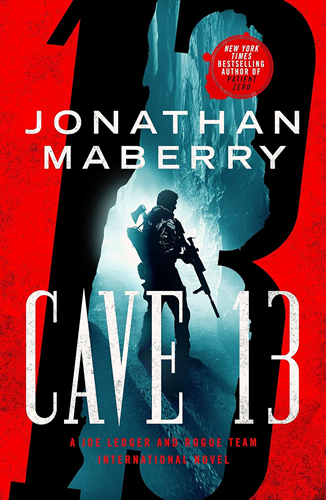
Jonathan Maberry is the multiple Bram Stoker Award-winning author of novels (Ghost Road Blues, Patient Zero, The Wolfman, etc.), nonfiction books (Zombie CSU, The Bite, etc.), and Marvel Comics (Black Panther, Doomwar). His Joe Ledger novels have been optioned for TV by Sony and are being published all over the world. In 2010 Simon & Schuster will release ROT & RUIN, Jonathan's first Young Adult novel. He's a member of ITW, MWA, and HWA. A true new media maven, you can find him on his website at www.jonathanmaberry.com and on Facebook and Twitter.
Don't get on his bad side, he also holds an 8th degree black belt in Shinowara-ryu Jujutsu and has been inducted into the Martial Arts Hall of Fame.
Jonathan Maberry is as well known in author circles for his commitment to fostering the careers of other writers as he is for his writing. It's for this reason that I'm indeed honored to have the opportunity to interview him. And although I'm excited to get into his thoughts on the writing world, I also want to hear more about his forthcoming novel, The Dragon Factory, published by St. Martins Griffin this March 2010.
In Drue Allen's debut novel, The Cost of Love, national security comes at a price. Domestic terrorists are testing a biological weapon in southern New Mexico, and her hero is forced to confront the terrible threat dominating the night skies of Roswell. Allen's romantic thriller reveals a real chill at its core. Writing the book involved a great deal of 'good old fashioned research' but Allen says she was also fortunate in already knowing a few people working in covert operations and military installations.
'I have always been interested in the men and women who protect our nation and what they are called upon to protect us against. I'm also a news junkie. Those things combined to form the nucleus of the plot of The Cost of Love.'
The novel's setting is inspired by her own fascination with the outdoors. Allen enjoys remote camping in the rugged mountains along the southwestern Texas border, coastal kayaking, and backpacking through the Canadian Rockies, and she has hiked extensively in the Guadalupe Mountains. She has also visited Roswell. 'I wanted to set my story in a region that was desolate, but that would also allow for some fun,' she explains. 'And what could be more fun than extraterrestrials? While bio-terrorism is a terribly serious topic, our fascination with what is BEYOND is intriguing and allowed me to lighten the mood in places.'
When Michael J. Parker published his first book, North Slope, in 1980, he thought he'd made it. After all, MacMillan was a large publisher and they only handled best-selling authors. Right? When they passed on his second book, Hell's Gate, he was discouraged but wrote The Shadow of the Wolf, which was published in 1984.
Then Parker, an engineer in the food service industry by day, hit a dry spell that would have crushed most aspiring authors and seasoned publishing veterans alike--23 years. "Winston Churchill went to deliver a lecture to Oxbridge undergraduates. He got up to the lectern and he stood there for something like a minute," said Parker. "Then he said, 'Never give up', got down and walked away. That story has been in my head a long time. It comes down to asking, what do you want out of life?"
It was Churchill's advice, combined with his own desire that kept him writing. "I call it the Sweet Curse. The 'sweet' is the desire to write. When I sent a manuscript to an agent or publisher and they rejected it, that was the 'curse.'"
It's not easy to get into the heads of killers, to relay their thoughts and feelings and deep, dark secrets in a way that makes them seems so real and so frightening. But J.T. Ellison does it, and she does it well.
Ellison is the best-selling author of the Taylor Jackson series of thrillers (All the Pretty Girls, 14, Judas Kiss, and The Cold Room). She has published numerous short stories in a variety of publications, including the anthologies Killer Year: Stories to Die For, First Thrills, and Surreal South 09.
Recently, I chatted with J.T. Ellison about her latest book, The Cold Room, and her upcoming thrillers.
In your latest thriller The Cold Room, you introduce the reader to the Conductor, a serial killer who keeps his victims in glass coffins until they starve to death. Draw us into the world of the Conductor and your protagonist, homicide detective Taylor Jackson.
The Conductor loves classical music, opera, and art. How much more normal could you get, right? There's just one catch. He's also a burgeoning necrosadist, with online friends he shares his fantasies with. Taylor Jackson, recently busted back to Detective by the Office of Professional Accountability, is trying to save face and solve one of the strangest murders she's seen in years. And to top it all off, her fiancée, FBI profiler Dr. John Baldwin, believes he has seen this scenario before, on an international scale.
What an intricately brilliant way to move along a mystery. Sans cops, and super sleuths, clever gumshoes or sassy wily females with a touch of testosterone--the vehicle used to drive, Blood Vines by Erica Spindler, is good old fashioned emotion. In the span of a Sonoma Wine Country late winter-into-early spring, Alex Clarkson will solve the case of an unearthed mummified baby--not with a magnifying glass, a side arm or a badge--but with a desperate search to find out who she is, and why she is, the way she is. The search for self is what will unravel the yarn as Alex stumbles through uncharted territory in search of her personal roots almost unwittingly peeling away the layers of a decades old murder. "I like to write about broken or hurting people, to make them walk through fire and come out whole," says Erica.
I love the way Spindler starts the book, "Ex-husbands are like bad pennies, they kept coming back". It's the kind of sentence that grabs you and holds on to you so you can find out why. The book starts with Alex Clarkson in the throes of passion and in the arms of her charlatan ex. He's older and sophisticated, seemingly with the loyalties of an alley cat at dinner time when someone's opened a can of Tuna--at first. It's a booty call, make no bones about it. But Alex likes the fit, the make and the model. He's Prada, she's Payless. But it's good sex and that's a good bargain no matter where you're shopping. But just as Alex is reaching new heights of pleasure, the passion is doused with a vision...'A robed figure, face obscured by a hood; flickering candles, smoke curling upward; naked bodies, writhing together. A faceless baby, screaming.'
Linda Fairstein is a prolific and bestselling author of legal thrillers starring Alexandra Cooper, a New York City sex crimes prosecutor. For more than a decade, readers have turned to her books for ripped-from-the-headline crimes, cutting-edge investigations, and vindication for victims. In her twelfth novel, Hell Gate, Alex Cooper finds her attention torn between investigating a shipwreck with contraband cargo - human cargo - and the political sex scandal of a promising New York congressman. The bridge between these cases leads our heroine down a darker and deadlier road than she ever imagined. Hell Gate is landing rave reviews, including this dandy from Kirkus: "Thrills, gossip, sex, history, self-righteous indignation and hints of parallels to the contemporary rich and famous, all whipped to a fine frenzy."
You write about a political sex scandal in Hell Gate. Were you inspired by any real life ones?
I like to think I've got a good imagination, but all of the political sex scandals I dreamed up were nothing compared to the real life antics that kept grabbing the headline space - in New York and all over the country. Just when I thought the last one couldn't be topped....along came the next guy. Yes, I was certainly inspired by some of the real-life sexcapades (including a certain governor who was my colleague in the Manhattan DA's Office), and it was kind of hilarious that I had to tone most things down a bit so they'd be more believable.
Mario Acevedo took a tried-and-true approach to writing success. After trying for years to write "regular" mystery stories, he said "To hell with it" and went to the extreme, going over the top with a vampire detective.
That extreme quickly led to a popular series that is now in its fifth book, Werewolf Smackdown.
Reviewers still aren't sure whether to take him seriously or not, and that's okay, because it sounds like Acevedo isn't sure himself. All he knows is he's having fun and so is his ever-expanding audience.
"My hero, vampire-detective and Iraq war veteran Felix Gomez, finds himself caught between rival werewolf clans scheming for control of Charleston, SC," he said. "It's a noir thriller filled with double crosses and violence that tests my hero's undead powers against ferocious werewolves and other vampires."
I caught up with the multi-talented Kate White, editor-in-chief of Cosmo and author of the enormously popular Bailey Weggins mystery series. She stopped by to talk about Hush and how she juggles her complicated life, why she's writing a book on time management, and where she finds her inspiration.
Hush is your first stand-alone thriller. I wondered, why a stand-alone thriller, and why now?
Well, as we know at Cosmo, sometimes even the best relationships need a break. I love writing the Bailey books, but I felt it would be nice to take a little break from them and re-energize, plus I wanted to try something new--something darker, scarier, with a different kind of protagonist.
Did your work as editor of Cosmo help you create the fabulous Bailey Weggins?
Thanks so much for the compliment. Cosmo has helped me tremendously with the Bailey Weggins books. I pick up all sorts of crazy dialogue here and witness great situations that I can incorporate in my books. I originally wanted to write about a private eye but I knew with my day job I'd never be able to take the time to do the research. So I decided to place my character at a magazine. It has made it so much easier.
Recently I sat down with Jennie Bentley, author of the Do-It-Yourself Mysteries, to talk about her latest, Plaster and Poison.
Aren't you introducing us to some family members in Plaster and Poison?
I am, as a matter of fact! For the past two books, Fatal Fixer-Upper and Spackled and Spooked, Avery, the main character, has been talking to her mother Rosemary on the phone. Rosemary is in California. Her husband Noel Carrick is a TV producer out there, and in Plaster and Poison, the two of them come to Waterfield to see Avery and to check out Avery's boyfriend Derek. Who has his own family playing a part in the story as well: Derek's father, Dr. Benjamin Ellis, is also remarried, and his wife Cora came with two daughters attached. Both of them, Alice and Beatrice, come to Waterfield for Thanksgiving; Beatrice with a couple of suitcases in the car. She has just left her husband, Steve, who is a lawyer in Boston, and she becomes an integral part of the plot. A long-dead Ellis also figures into the World War One history mystery in Plaster and Poison.
Which new character was the most fun for you to create and why?
I really had fun with the history mystery in this one; so much so that my editor told me I had to tone it down because it was threatening to take over the plot. So the historical characters are both near and dear to my heart. Rosemary is a fun character to write, as well. So many people had asked me if she would ever be in any of the books, because they liked her so much when Avery spoke to her on the phone, and it was nice to be able to introduce her here.
Wendy Corsi Staub is the bestselling author of more than seventy novels. In addition to multiple New York Times bestselling adult thrillers, she has penned more than two dozen young adult titles, and as Wendy Markham, she is a USA Today bestselling author of chick lit and romance. Her awards include a Rita from Romance Writers of America, the RT Bookreviews Career Achievment Award in Suspense, three Westchester Library Association Irving Awards for Fiction and the RWA-NYC Golden Apple for Lifetime Achievement. Wendy lives with her husband and children in suburban New York City where her Type A drive keeps her working long hours to maintain her prolific output for the numerous fans awaiting her next novel.
Live to Tell, which comes out this month, has already garnered a starred review from Publishers Weekly -- "once Staub's brilliant characterizations and top-notch narrative skills grab hold, they don't let go."
And some of our favorite New York Times bestselling authors had a few things to say about Wendy's latest . . .
Lee Child: "Solid gold suspense . . . this one is a wild ride."
Lisa Jackson: "I couldn't put it down!"
Beverly Barton: "Live to Tell is Wendy Corsi Staub at her best. A superbly crafted plot and characters who immediately draw you into the story makes this subtle yet terrifying thriller a must read."
Brenda Novak: "Clever, well-written and riveting. Wendy Corsi Staub is a master storyteller!"
How do you get happy after reading a review by the highly respected ForeWord Reviews that says of the author, and I do quote this exactly, "... you want to reach through the book and strangle him."
Well, I guess you don't get concerned about their opinion of you when they go on to say about your book, and again, I quote exactly:
"Wild Laws is creative and captivating. It features bold characters, witty dialogue, exotic locations, and non-stop action. The pacing is spot-on, a solid combination of intrigue, suspense, and eroticism. A first-rate thriller, this book is damnably hard to put down. It's a tremendous read."
Jim Michael Hansen (and it's Jim, no James in there anywhere - he says it's because Cagney got there first) is another lawyer writing thrillers. He's no Grisham - the hair cut is the giveaway there - and that's a good thing. And Wild Laws is no legal procedural, it's belongs in the rare genre of books-you-can't-put-down. Booklist calls it "a wild ride" and ForeWord goes on to say it "rivets reader's attention."
Recently I sat down with Thomas Kaufman to talk about his debut novel, Drink the Tea.
Your book, Drink the Tea, won the PWA's Best First Private Eye Novel Competition. What's that all about?
Each year, the Private Eye Writers of America and St Martin's Press choose one previously unpublished private eye writer who stands out from the rest. A person who has written a mystery so ground-breaking, so sensational, that they can't help but succeed.
Unfortunately, they couldn't find anyone like that, so they settled for me.
Can you give us a sneak preview of Drink the Tea?
Growing up without parents or a home, Willis Gidney is a born liar and rip-off artist, an expert at the scam. By age twelve Gidney is a successful young man, running his own small empire, until he meets Shadrack Davies. That's Captain Shadrack Davies, of the Washington, D.C. Police. Davies wants to reform Gidney and becomes his foster father. Though he tries not to, Gidney learns a small amount of ethics from Shad--just enough to bother a kid from the streets for the rest of his life.
Recently, I sat down with debut author Ronie Kendig to talk about her novel, Dead Reckoning.
I'm very intrigued by the idea of a CIA father's history and reputation touching his grown-up daughter's life as it does in Dead Reckoning. I'd love to hear more about your character, Shiloh Blake and her journey for independence.
Shiloh's story was actually borne out of two previous novels, one that we (my agent Steve Laube and I) tried to sell and one that I skipped to write Dead Reckoning. After having been snatched and experimented on, Shiloh is rescued by her parents, and that's when the real turmoil begins. Her "seizures" in the book are the product of those experiments, and then, as an older child, watching her mother murdered in front of her own eyes are the source of Shiloh's intense hatred of her father. As a teen, she and her father grew further apart, until she finally races off to college just to get away from him. She opts to major in underwater archeology because of her mother's love for the ocean, and because it will take her far away from her father and make her unreachable--and unable to be spied upon by her father's minions. She believes she's been successful in this, but in reality, her father has kept close tabs on her, allowing her to think she's finally won her independence.
What happens when a legendary spy starts to lose it? That, in a nutshell, is the startling and original premise behind Once A Spy, Keith Thomson's debut novel due out this month. It's an idea that the author takes to both surprising and delightful places.
Drummond Clark, the novel's central character, was the ultimate intelligence agent until Alzheimer's disease began to change him into a confused old man dependent on has to depend on his son Charlie. Charlie has no idea of his father's professional past until his house explodes and Drummond hot wires a car to help them escape a gang of gunmen.
And then it gets interesting!
Thomson says he got the idea for this unique character from a girl friend talking about Thanksgiving dinner with a financier she had dated before him.
"Tragically, Alzheimer's had forced the financier's father into retirement in his early sixties," Thomson says. "He'd been a factory manager for a big American company in several foreign countries. While they lived abroad and the son soaked up cultures and languages, the father was a xenophobe going out of his way to procure Budweiser and adamant about sticking to speaking English. Which is why everyone around the table that day was surprised when he began speaking French. Evidently, IBM factory manager and xenophobe had been cover. I wondered: What do intelligence agencies do when an operative loses his ability to retain important secrets?"
Vicki Hinze's name on the cover always guarantees a great read. Her latest takes us to the Crossroads Crisis Center and a man named Benjamin who is fighting grief. Hinze examines faith and memory as Benjamin struggles to believe and love again. She talked to ITW about Forget Me Not.
What sparked the idea for Forget Me Not?
A stray thought that sparked a question: How deep does faith run in a person? How deep does a person's sense of self run? What if you didn't know who you were? Would that impact morals and ethics and judgment calls? If so, how? If not, why?
That sparked the idea for Forget Me Not. And the worst case scenario I could come up with was what if your own life were a mystery to you? Everything about you would be impacted. So do you get to a place where you innately have a sense of self? I came up with answers that worked for me and wrote the book.
Why go outside what your fans usually expect from your novels?
I wanted to write a faith-affirming romantic thriller because I love pushing the boundaries that expand the genre. I've always loved that, and I suspect I always will. The second reason was intensely personal. Due to a clerical error, for about six weeks I thought I was terminal. It made me think along the lines of "If this is the very last book I write, is the very last book I will wish I've written?" It wasn't. I've always had inspiring elements in my books--healing books--but I'd never specifically written inspirational novels. On my life, during that heavy thinking time, I came to a bottom line: I've loved well and been well loved. Real life doesn't get much better than that. So I was at peace about it. Not eager, but at peace. Then within a short span of time two editors who read my Faith Zone blog approached me and both used the exact same verbiage: "Have you ever considered writing fiction for inspirational market?" I hadn't, but I did then because I looked at it and it felt right. Purpose. And being approached twice in such a short time, well, I took it as a sign. So that was that. And I have to say, I'm loving it.


