
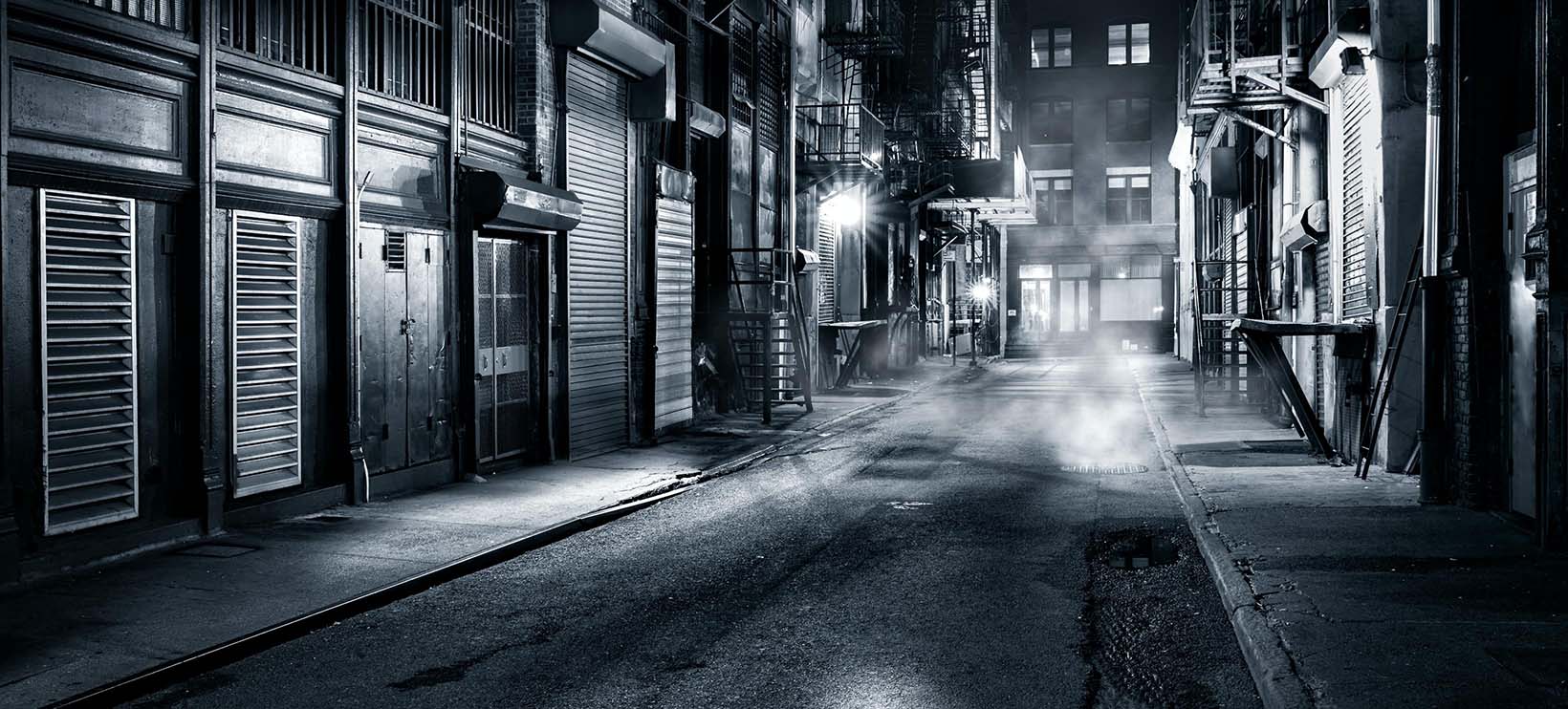




Galway is a small gem of a city, set hard against the sea on the western coast of Ireland. It is a university town particularly suited for walking: from the train station to Eyre Square in the city center; down a series of wide streets of shops set aside for pedestrians, to the Spanish Arch and Nimmo's Pier; along the River Corrib to The Claddagh, a swath of parkland jutting out into Galway Bay; past Lynch's Castle to Charlie Byrne's, one of the best--and most eclectic--book stores anywhere.
But for fans of author Ken Bruen, a stroll through the streets of Galway takes on a sinister note. The pace quickens to avoid
sadistic nuns and drunken priests
corrupt Guards
gangs of thugs armed with hurleys
predatory drug dealers and users
assorted other undesirables.
Galway, you see, is the stamping ground of Jack Taylor, an on-again-off-again drug addict and alcoholic who is eking out a living as a part-time private investigator. Taylor was unceremoniously dumped from the national police at the start of The Guards, and through six more books he has made his way more or less successfully through the seamy underbelly of Galway. The Taylor series has garnered a number of honors for Bruen, including Shamus Awards for The Guards (in 2004) and for The Dramatist (in 2007), and a Macavity Award for The Killing of the Tinkers. Add a batch of awards for foreign language translations and you have some of the high points of a writing career in high gear.
Bruen is author of some 30 novels, including a series featuring Inspector Brant set in London. The Tower (written with Reed Farrel Coleman) and London Boulevard were released in the United States in November 2009, and the next installment in the Jack Taylor series, The Devil, is scheduled to be out in 2010.
Bruen was generous with his time and shared the following thoughts:
On setting as character: The city of Galway is far more than mere window dressing for the Jack Taylor series.
"I treat Galway as a character in the series and that way it doesn't seem like a tour guide."
But what does that really mean? We start The Guards knowing nothing about Jack Taylor and nothing about Galway. Then, from novel to novel, our understanding of both grows, until a half-dozen books later it's difficult to imagine Taylor without Galway, and vice versa. Bruen writes about other places--London in the Inspector Brant series and New York in Once Were Cops, for example--but the farther from Galway Bruen strays, the less important the setting becomes. Bruen's roots are in Galway, and it shows.
"Everything in the series screams of the old Galway and even Jack's surname is from Taylor's Hill, a posh part of the city he would never be in. Galway is just the right size for Jack's ego and still Irish enough to fulfill my hope of showing the old Ireland."
On travel: Galway may be home, but Bruen is anything but a homebody. He has travelled extensively, and continues to do so. It is an important part of a writer's development:
"Paul Theroux is one of the few writers to give sensible advice on writing I think, he said............Leave home...........and the sheer distance I put between my home and me own self gave me such a clear vision of my own country. It opens up your mind in ways you never expected..............the worst news I'd hear would be that I could never hop on a plane again."
Before his career as a writer took off, Bruen spent a lot of time on the road in a variety of odd jobs, including work as a security guard at the World Trade Center and as an actor in some low-budget films. He also taught English in Japan, Asia, Africa, and South America.
"It was a great way to travel and as a failed actor, I was able to literally act for my students, even taught Military English to The Kuwait's, just before The Iraquis came calling so obviously my teaching wasn't the best there. . . Meeting so many different people meant my imagination was crowded with so many different characters."
The low point came in Brazil, where a nasty bar fight led to Bruen's arrest. Although he never was charged with anything, Bruen spent four months in a Brazilian jail, a fate not uncommon for foreigners in the Third World. The physical and mental abuse left scars; writing became his therapy. And as important as travel can be to a writer, it is not always necessary to visit a locale to write about the place convincingly:
"One on my favourite stories was set in Philadelphia and I'd never been there, likewise Khartoum."
On antagonists: Cropping up time and again as thorns in the sides of Jack Taylor, Inspector Brant, and other Bruen protagonists are institutions, mainly the Catholic Church, the Garda (Ireland's national police force), and other law enforcement agencies. In the introduction to Dublin Noir, a collection of short stories that Bruen edited, he talked of a bounty placed on his head by the Irish Tourist Board. It's still unclear whether he was joking:
"I believe they have increased the bounty and yet, they like the tourists who ask them how to find Jack's Galway!!!! . . . I'm on the hit list of all the above but some nuns, one priest and 3 Guards have told me they love the books!!!!"
On writer's block: Someone asked Raymond Chandler what to do when a story bogged down. "Bring in a man with a gun," Chandler supposedly advised. Bruen had similar advice:
"Kill somebody..............seriously...........as Otto Penzler once said to me, Bruen!, you get us to love a character then you kill them...............precisely, or I'll think of what would shock the living be-jaysus outa me in a book then I add that, works real well with writers block."
On noir: Publisher's Weekly called Bruen "one of the finest noir stylists of his generation." That's fair. His books have more in common with the noir classics than with contemporary thrillers, and readers who pick up a Bruen novel expecting the latter will be disappointed. The situations his protagonists face are local and personal rather than global, the protagonists are more often than not seriously flawed, and conflict resolutions are dark and ambiguous. But that's what Bruen has in mind. He likes being a "noir stylist":
"I'm more than happy with the label and James M Cain remains my greatest influence, with Willerford, Thompson as well. They plunge into the darkness and that is what fascinates me, not to stare into the abyss but to dive into it . . . I always planned to show the seamy side of the Happy Ireland, when I began the series, the scandals hadn't broken then and now, 8 books in, it seems even I haven't enough books to show all the corruption. More information, more investigative journalism and the internet have laid bare the inner workings of the previous hidden dirt."
On plot vs. character:
"Jason Starr, James Sallis, Daniel Woodrell, Reed Coleman, Pete Speigelman, Andrew Vachss still hold the flame for character driven novels and I find little of interest in just plot driven novels as they don't resonate in my mind."
On an unlikeable series protagonist: Jack Taylor is addicted to drugs and alcohol, frequently unreliable to friends and clients, and his cases often come to successful resolution more by accident than by design. And, unlike the protagonists of most contemporary thrillers, he often gets the crap beaten out of him by hooligans, or Guards, or both. But against all odds, Taylor's friends and Bruen's readers never give up on the detective. Maintaining readers interest and sympathy for an unlikeable protagonist means walking a narrow line:
"I try to keep jack interesting in that even thought he is an arsehole, he is loyal to his few friends and will risk all if he believes he is right and as the NYT said, God Bless em, he is as likely to kick you in the head as give 20 euro to a homeless person, I think he appeals because he is so desperately flawed and speaks to the human condition as we are, not as the TV, movie Heroes would have us believe. And too, he knows his own act, whatever else he does, he is honest with his own self, to his terrible cost."
On reading: Ironically for so prolific a writer, Bruen grew up in a family that valued neither reading nor books. His reaction was to become a prodigious reader and to litter--in a very good way--his own books with literary quotations and references. Some references, like Jack Taylor's on-going interest in the work of Thomas Merton, a Benedictine monk and one of the most influential religious writers of the 20th Century, give readers insight about an unexpected quirk in a character:
"I take what would seem obvious for a character then turn it on its head, applying Irish logic which is as non-logical as it gets."
Others appear simply because Bruen wants them there:
"Purely selfish reasons in truth, I wanted to spread the word on writers I love."
On writing: A prolific writer of both novels and short stories, Bruen writes every day, without fail. Is there a "typical" day?
"For me..............Yes, I start at 5.00................do 2 hours then end of the day, I read what I wrote into a tape recorder and if it doesn't have the music, I bin it."
About writing a series:
"It's like returning to family, though in my case, a highly dysfunctional one and to see how you can continue to expand the characters."
On the future: Shooting for The Guards, a 10-part series, has finished, and production for The Killing of the Tinkers is scheduled to start in April 2010. Oscar winner William Monohan, who directed The Departed, is on board to write and direct the film adaptation of London Boulevard, which was released as a hardcover in the United States in November. Colin Farrel and Keira Knightly are slated to star. As to Jack Taylor and Inspector Brant:
"Brant is finished for now, the new Jack, titled The Devil comes out in April and Headstone, I'm currently writing."
Milton Toby is an author and attorney who writes from his home in Georgetown, Kentucky. His long-standing involvement with Thoroughbred racing and the horse business, his representation of Death Row inmates, and years spent in the Third World combine to produce fiction crammed with unique twists and turns. His short stories have won national awards and he recently completed his first novel. Milton's essay on Lionel Davidson's THE ROSE OF TIBET will appear in the upcoming THRILLERS: 100 MUST READS.


